Activists try to deliver aid to Palestinians in homes besieged by Israeli settlers
Two families have been trapped in their homes in the occupied West Bank for several days.
This is an editorial recap by NotívaNews, republishing third-party facts; this is not our own reporting. Original source: Al Jazeera.
Behind the headlines of diplomatic summits and ceasefire negotiations, there is a quieter, more desperate struggle unfolding in the hills of the occupied West Bank. It involves activists with boxes of food and medicine, and Palestinian families who have not stepped outside their own front doors in weeks. The scene is not a war zone in the traditional sense, but for the people inside those homes, the siege is just as real—and just as terrifying.
What does it mean to be besieged in your own living room, watching the world argue about your fate from a distance?
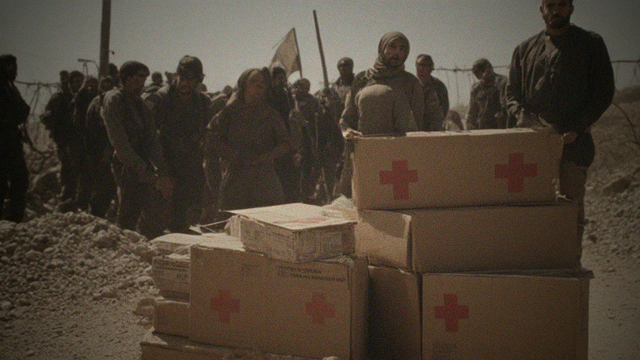
The situation centers on a handful of Palestinian communities where Israeli settlers have established a persistent presence, effectively cutting off the villages from the outside world. According to the reports, the activists—a mix of international volunteers and Israeli peace advocates—attempted to reach these homes with essential supplies. They were met with resistance, and the delivery was ultimately blocked. For the families inside, this was not just a failed errand; it was a confirmation that their isolation is not an accident, but a policy of pressure.
This sounds distant, but it connects with you more than it seems. The activists’ convoy is a small, human counterpoint to the machinery of occupation. They are not soldiers or politicians; they are ordinary people who decided that the sight of children without milk and elderly people without blood pressure medication was something they could not ignore. Their failure to get through is a story of checkpoints, of roadblocks, and of the sheer logistical and human difficulty of simply being a neighbor in a land where lines are drawn with such finality.
Understand the context before jumping to conclusions. The West Bank has been under Israeli military occupation since 1967, but the nature of that control has shifted over the decades. What we are seeing now is a more granular, localized form of pressure—settlers, often backed by the military, establishing a presence so close to Palestinian homes that daily life becomes impossible. The activists’ mission was a direct response to this: if the state will not protect these families, they reasoned, then civil society must step in. The blockade of their convoy is a stark reminder that, on the ground, goodwill is often not enough.
And what could this mean from here on? The blocked aid delivery may be a turning point, or it may be just another Tuesday in a long, grinding conflict. It could galvanize more international volunteers to join the effort, turning these small convoys into a regular occurrence. Alternatively, it could lead to stricter measures, making the homes even harder to reach. For the families inside, the calculus is brutally simple: every day the supplies do not arrive, the walls close in a little more. The activists will likely try again, because the alternative—accepting that some people are simply unreachable—is a concession that neither their conscience nor the families’ desperation can afford.