Trump administration unveils tariffs on drone imports
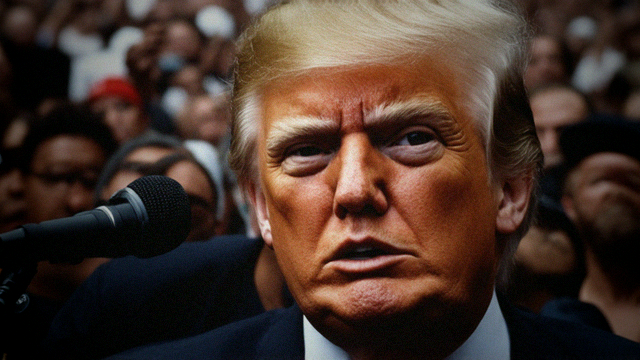
President Trump on Thursday announced new tariffs on drone imports in an effort to curb U.S. reliance on foreign supply chains amid possible national security threats. Under a proclamation signed by Trump, larger drones with certain sensitive capabilities, including thermal imaging, are subject to a 100 percent tariff, along with other critical parts. Smaller drones…
This is an editorial recap by NotívaNews, republishing third-party facts; this is not our own reporting. Original source: Reuters (2025).
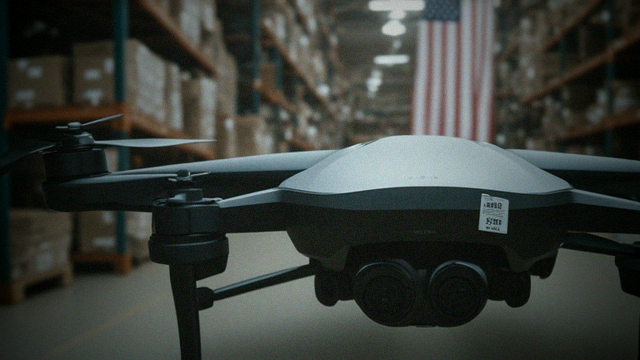
The announcement landed without much fanfare, but its ripple effects could touch everything from the cost of a hobbyist’s camera drone to the strategic calculus of the Pentagon’s supply chain. The Trump administration has unveiled a new round of tariffs on imported drones, a move that frames the humble unmanned aerial vehicle as the latest front in a broader trade and national security strategy. Beyond the spin, this is the substance: the policy is designed to wean the American market off foreign-made technology, particularly from China, which dominates global drone manufacturing. It affects more people than you think, and not just the obvious players in the defense industry.
Here is what the politics really means. For years, the U.S. has watched its commercial and consumer drone market become heavily reliant on overseas production. This tariff structure is an attempt to correct that imbalance, but it comes with a built-in tension. On one hand, it could be a powerful incentive for domestic manufacturers to scale up, creating jobs and securing a critical piece of technology infrastructure. On the other hand, the immediate cost of that ambition may be passed directly to the consumer and to small businesses—farmers using drones for crop surveys, real estate agents for aerial listings, or filmmakers for production shots—who will likely see price tags climb as importers absorb the new duties.
The question that hangs in the air is whether the strategy will build a resilient industry or simply build a more expensive one. The administration’s logic is rooted in a legitimate concern: in an era of great-power competition, relying on a potential adversary for a tool so central to modern warfare and commerce is a vulnerability. Yet, the path from tariff to self-sufficiency is rarely a straight line, and the timeline for a robust American drone ecosystem is measured in years, not months. In the interim, the policy could create a bottleneck, slowing the adoption of drone technology in sectors where it was just beginning to prove its value.
What should a reader take away from this? If you are in the market for a drone, or if your business depends on them, this is a signal to watch your supply costs. For the broader public, it is a reminder that trade policy is not an abstract debate—it is a lever that adjusts the price of everything from the produce on your table to the tools of modern industry. The coming months will reveal the real-world impact, as companies either accelerate their domestic plans or pass the new costs along. Watch what happens next—it matters, because the outcome will tell us a great deal about the viability of using tariffs as a primary tool for reshaping American industrial policy.