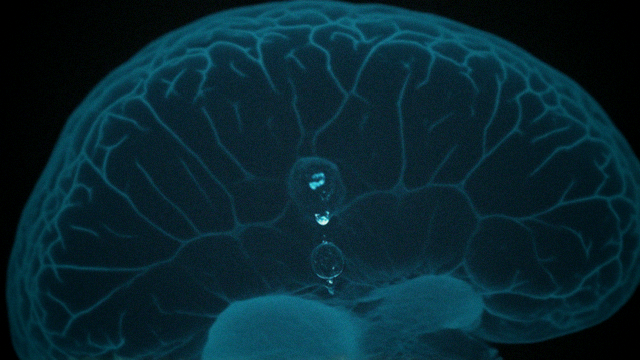
Curiosity has its own neural signal: Brain separates valuable information from water rewards in mice
Often, humans and other animals seek information that can help them complete tasks and attain desired rewards. In some cases, however, they seek information driven simply by curiosity and a desire to obtain knowledge for its own sake, even if it does not lead to external rewards.
When your father forgets his medication, you get that knot in your stomach, right? You wonder if his mind is slipping, or if it is just a busy day. But what if the brain itself has a built-in system for deciding what is worth remembering? This is an editorial recap by NotívaNews, republishing third-party facts; this is not our own reporting. Original source: Neuroscience News (2024).
Scientists studying mice have discovered that curiosity has its own neural signal, a distinct pattern of brain activity that separates the drive to learn valuable information from more basic urges, like the desire for a water reward. Think of the brain like a busy kitchen: it does not simply serve every dish that comes in. It has a chef who tastes each ingredient and decides which ones deserve a place on the menu. In this case, the “dish” is information, and the “taste test” is a specific neural signal that marks curiosity as something special, distinct from a simple craving for water or food.
The finding may feel distant from your daily worries, but consider this: if scientists can identify how the brain values information on its own, it could one day help us understand why some people lose their thirst for learning, or why others become consumed by it. Could the same mechanism that makes a mouse explore a new corner of its cage be the one that keeps your grandson asking “why” a hundred times a day? And more importantly, could understanding this signal help us protect the curiosity of an aging parent who has stopped asking questions altogether? These are not just academic musings; they touch on the very essence of what keeps our minds young and engaged.
The research, conducted on mice, showed that the brain does not treat all rewards equally. A sip of water satisfies a physical need, but the pursuit of new information triggers a different, identifiable pattern of neural activity. This suggests that curiosity is not just a byproduct of seeking pleasure or avoiding discomfort. It is a fundamental drive, wired into our biology, with its own signature in the brain. For families, this may be more common than you think: the spark in a child’s eye when they solve a puzzle, or the quiet satisfaction of an elder finally mastering a new phone setting, are all small windows into this powerful neural process.
So, what does this mean for your family’s health? It means that nurturing curiosity is not a luxury; it may be as essential as a balanced diet or a good night’s sleep. Do not ignore what your body—or your brain—is telling you. If you notice a loved one withdrawing from new experiences, it might be a gentle nudge to offer them something novel: a new book, a different route for a walk, or a story from their childhood they have not told in years. Think of health like a garden: watering every day prevents the drought. Engaging the mind with fresh information is that daily watering.
Let us take care of this together, step by step. Start small. Ask a question you do not know the answer to, and let the search be the reward. For the older adults in your life, encourage a hobby that challenges them just enough to be exciting, not frustrating. And for yourself, remember that every moment of genuine curiosity is a small victory for your brain’s health. The science is still unfolding, but the message is clear: the brain craves knowledge, and feeding that hunger may be one of the kindest things you can do for the ones you love.